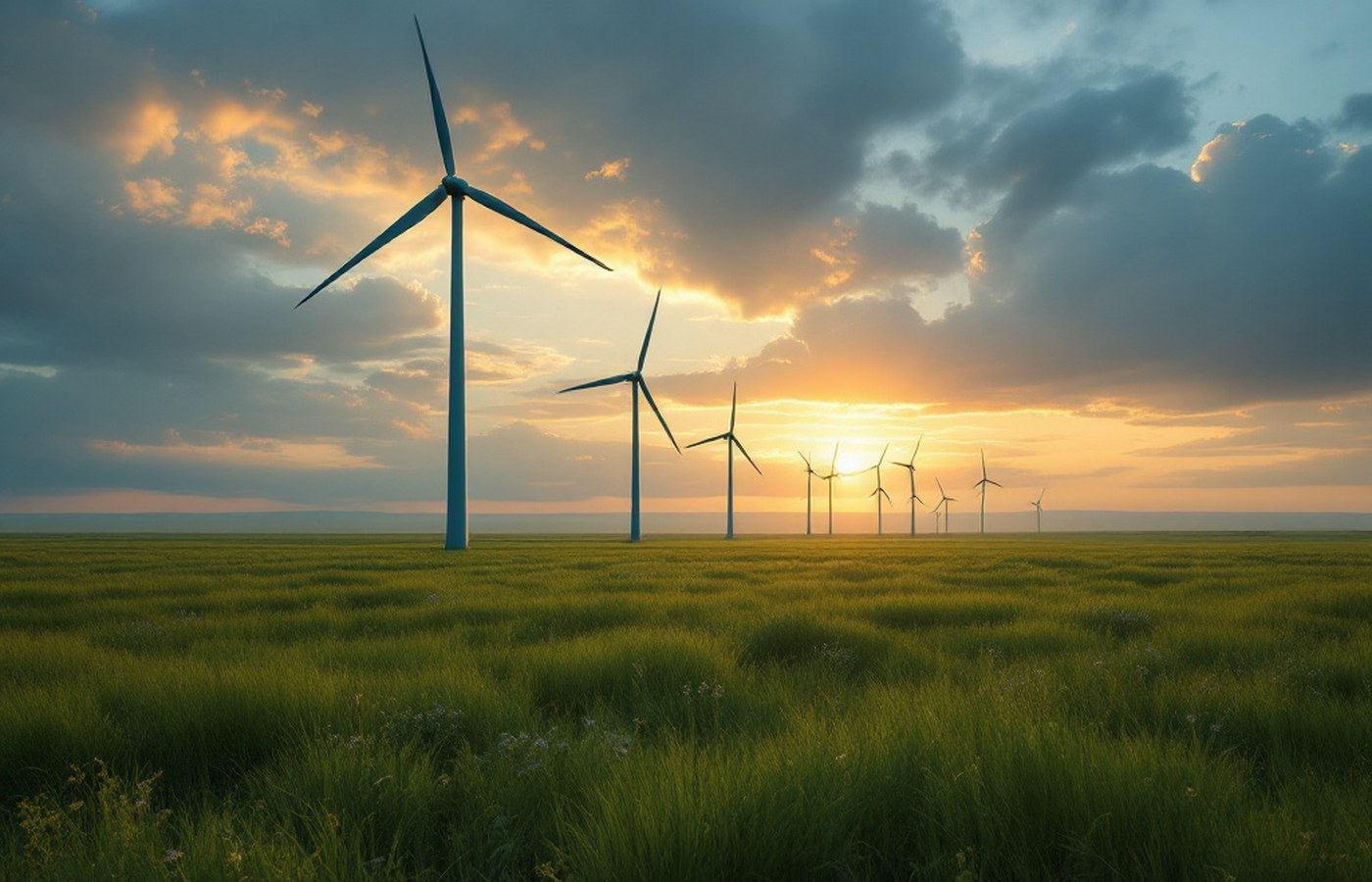
Rapidly shifting climate patterns, deteriorating air and water quality, and the accelerating effects of global warming are just some of the urgent challenges facing both humanity and the planet. These problems have been studied extensively, and their root causes are now well understood. One solution that consistently emerges from that analysis is transitioning away from non-renewable energy sources toward renewables — an approach widely recognized as far healthier for the environment, the planet, and human civilization as a whole.
01The collaboration of two giants
In a significant and welcome development, two of the world's largest energy companies — Eni and GE — joined forces to invest in a major renewable energy project. The announcement was greeted with enthusiasm by those who care deeply about the planet's future and are concerned about its current trajectory. According to the official press release, the project would be located in Kazakhstan and would represent Eni's first large-scale wind power venture in the country. Known as the Badamsha project, it was slated for completion by the end of 2019.
02The significance of the venture
The Badamsha project marked Eni's first foray into this type of initiative, undertaken in partnership with GE, a company that had already built a strong and credible position in the renewable energy sector. GE Renewable Energy was a significant force in the industry — a ten-billion-dollar business with clear ambitions to scale aggressively and deliver the cleanest energy solutions possible to markets around the world. Eni, meanwhile, had been operating in Kazakhstan since the 1990s, maintaining deep ties to the country and holding substantial stakes in numerous projects there, particularly in the Northern Caspian Sea region.
GE employed more than twenty-two thousand people worldwide and operated in roughly eighty countries, with a stated mission to collaborate with governments and businesses everywhere to advance renewable energy development across economies of all sizes. Eni, for its part, operated in approximately seventy countries and employed thirty-three thousand people globally. Taken together, the scale and reach of both organizations meant that this project had the potential to signal the start of something genuinely consequential for the future of both human society and the natural environment.
Two of the world’s biggest energy companies, betting together on the Kazakh wind.
03The details of the project
The project was expected to add forty-eight megawatts of capacity to Kazakhstan's national grid, meaningfully contributing to the country's broader goal of having renewables account for twenty-five percent of its total energy mix. General Electric announced it would supply thirteen of its 3.8-130 onshore wind turbines for the installation, each capable of generating 3.8 MW of power and mounted at a hub height of eighty-five metres.
Badamsha, by the numbers
The Badamsha facility is located in the Aktobe oblast, in Kazakhstan's north-western region. As a project, it represents far more than its technical specifications suggest — it stands as a clear demonstration of both companies' serious commitment to the energy transition and their shared belief in the mission of building a more sustainable world.
The site & the partners
- Location
- Badamsha, Aktobe region, Kazakhstan
- Eni
- HQ Rome, Italy — in Kazakhstan since the 1990s · eni.com
- GE Renewable Energy
- Wind, hydro & grid — now part of GE Vernova · gevernova.com