
Philip Johnstone has been a member of the research team at the Science Policy Research Unit (SPRU) at the University of Sussex for a number of years. During that time, he has worked closely with the Sussex Energy Group (SEG), contributing to several key areas of inquiry: the democratic implications of sustainability transitions, industrial policy, and — most notably — disruptive innovation.
Before diving into the subject matter, it is worth knowing a little more about the man behind the research. Originally from Scotland, Johnstone takes environmental issues seriously and actively looks for ways to reduce his own carbon footprint. Rather than fly, for instance, he makes the long train journey from the South Coast all the way to Edinburgh whenever the opportunity arises. What follows covers everything you need to know about disruptive energy.
Profile — Philip Johnstone
- Role
- Researcher, Science Policy Research Unit (SPRU)
- Group
- Sussex Energy Group, University of Sussex, Brighton, UK
- Focus
- Disruptive innovation · sustainability transitions · industrial policy
- Learn more
- sussex.ac.uk/spru
01The concept of disruptive technologies
According to Johnstone, the concept of disruptive technologies first emerged in the 1990s and is today most widely recognised under the term "disruptive innovation." The central idea is that new business models can produce disruptive outcomes regardless of the technological shifts driving them from beneath. Disruption gradually erodes the market share of established players. Crucially, companies that follow the disruptive-innovation model rarely stop to consider the broader consequences for the world around them — their focus stays firmly on whatever will strengthen their own business.
02Emerging disruptive energy technology
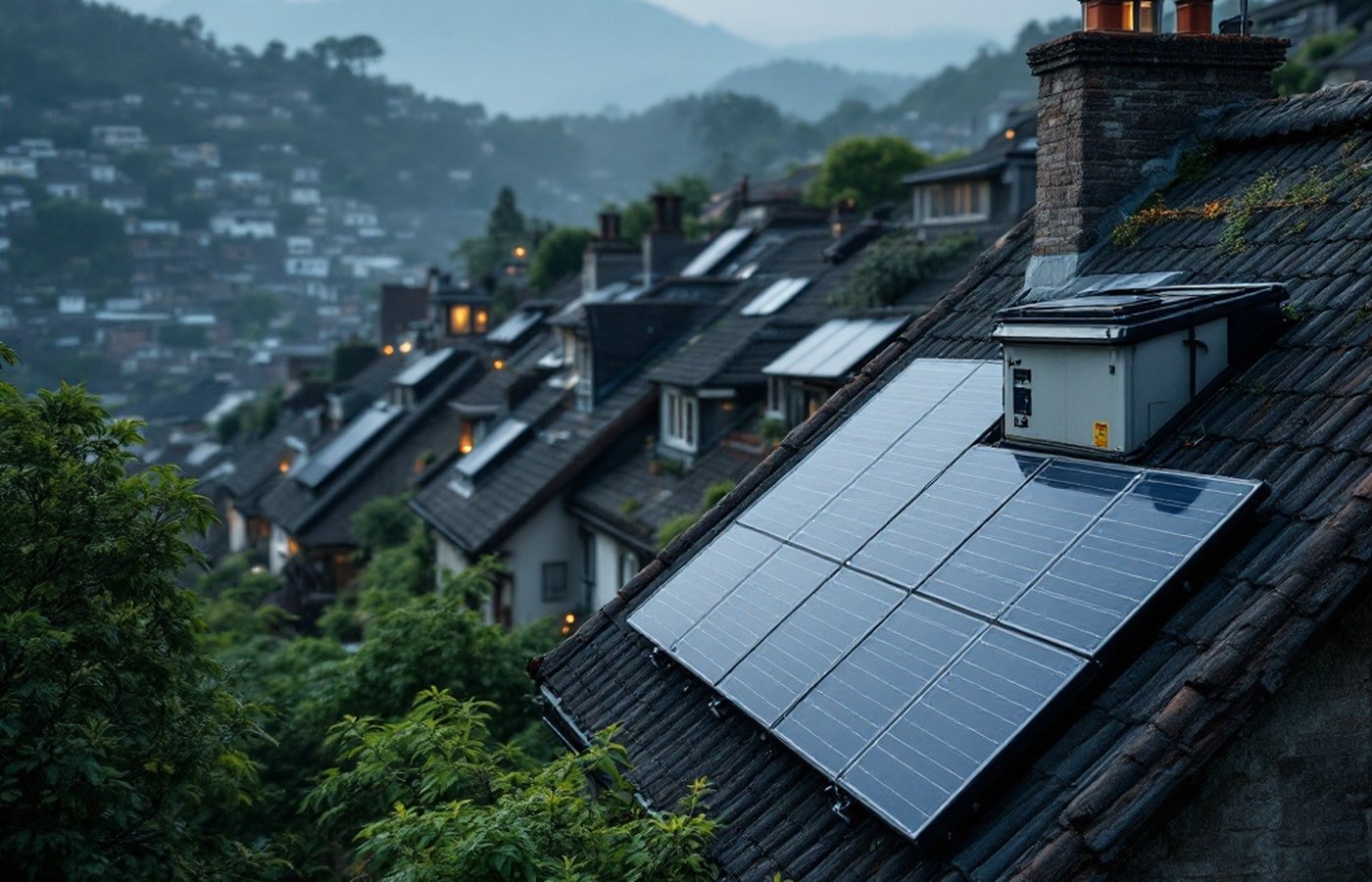
Looking at the world's most developed economies, it becomes clear that a point of no return has been reached: the global shift to renewable energy is no longer optional. The only real uncertainty is how long it will take for that reality to be fully accepted and acted upon. According to this research, the decentralisation of renewable energy production — alongside advances in renewable storage — represents the first stage of disruption, and integrating those renewables into existing energy systems brings a substantial set of challenges along with it.
Affordable, efficient household electricity storage appears to be the breakthrough everyone is waiting for. How exactly it will be rolled out at scale, however, remains an open question. The prevailing view is that household battery storage becomes a genuinely disruptive force the moment it reaches a price point that ordinary consumers can access — because there is little value in bringing a technology to market that remains out of reach for most people.
The research also identifies a second wave of disruption centred on the transport sector. Electric vehicles are continuing their upward trajectory, with a growing number of consumers eager to make the switch. Many countries are already taking concrete steps to phase out fossil-fuel-powered cars in favour of electric alternatives. Others are working through the wider knock-on challenges this creates: the UK, for example, is actively considering the regulatory framework that widespread electric vehicle adoption will require — since a sufficiently large shift to electric driving will inevitably place significant new demands on the national grid.
Clean disruption follows the same logic as digital disruption: you no longer need more resources to produce more energy.The core of Johnstone’s argument
03Why is renewable energy production a disruptive technology?
Researchers refer to this broader phenomenon as clean disruption, and it is disruptive in a very specific sense. It draws on the same logic that has been applied to digital technologies: traditional energy business models come under pressure because, unlike coal or gas, renewables do not require ever-increasing resource inputs to generate ever-increasing amounts of energy. As a result, wholesale energy costs fall considerably — and that decline creates serious structural problems for the incumbent players and the business models they rely on.
04Conclusion
Those are the core findings of Philip Johnstone's research into disruptive energy. It is increasingly difficult to argue against the conclusion that renewable energy represents the future of global power generation; the real question now is simply how quickly the world can complete that transition. The path forward will not be straightforward by any measure — but that difficulty does nothing to diminish the urgency. If anything, the long-term stability of the planet may well depend on getting it right.
Global warming is destroying our world every second — and that is why it is important to take the right steps at the right time.